
London Blue Topaz Cuts and Shapes: How to Choose the Perfect Ring Stone

The cut is the single most important factor in how a London blue topaz ring looks on your hand, more than carat weight, more than a shade of blue. Colorless topaz is plentiful in nature, and it is routinely treated to produce the deep, inky blue of London blue topaz, according to the Gemological Institute of America (GIA). Because the color is uniform and the crystal grows in long columns, cutters can shape London blue topaz into nearly every classic outline, from round and oval to heart, trillion, and emerald cut. That abundance is exactly why choosing well matters.
Key Takeaways
- Blue topaz is a December birthstone, and topaz ranks 8 on the Mohs hardness scale (GIA), so faceted cuts hold their polish for years.
- Cut controls light: a round brilliant maximizes sparkle, while step cuts like emerald and baguette emphasize depth of color.
- Shape flatters differently: ovals and marquise elongate the finger; hearts and trillion cuts carry romantic, distinctive symbolism.
- East-West settings rotate elongated stones sideways for a fresh, modern silhouette at the same carat size.
- Topaz has perfect cleavage in one direction, so protective settings like bezels suit daily-wear rings best.
Why Does the Cut Matter So Much for Blue Topaz?
Every polished gem, whatever its species, is built from the same three zones, and each zone does a different job with light. The Gemological Institute of America (GIA) explains that the table facet gathers light from above, the crown facets disperse light to create brightness and fire, and the pavilion facets reflect light back to the viewer's eye. In the standard round brilliant cut, that means 57 or 58 facets working together, per GIA's cut anatomy guide. For a saturated stone like London blue topaz, the pavilion depth also decides whether the blue reads as a rich, velvety pool or a thin watery wash.
Brilliant-cut styles scatter white light into flashes of sparkle. Step-cut styles, with their long parallel facets, act more like hallways for light, trading some sparkle for a calm, glassy depth that suits deep blue beautifully. Neither is better; they are two different personalities, and the rest of this guide helps you match the personality to the wearer.
What Does Shape Actually Change About a Ring?
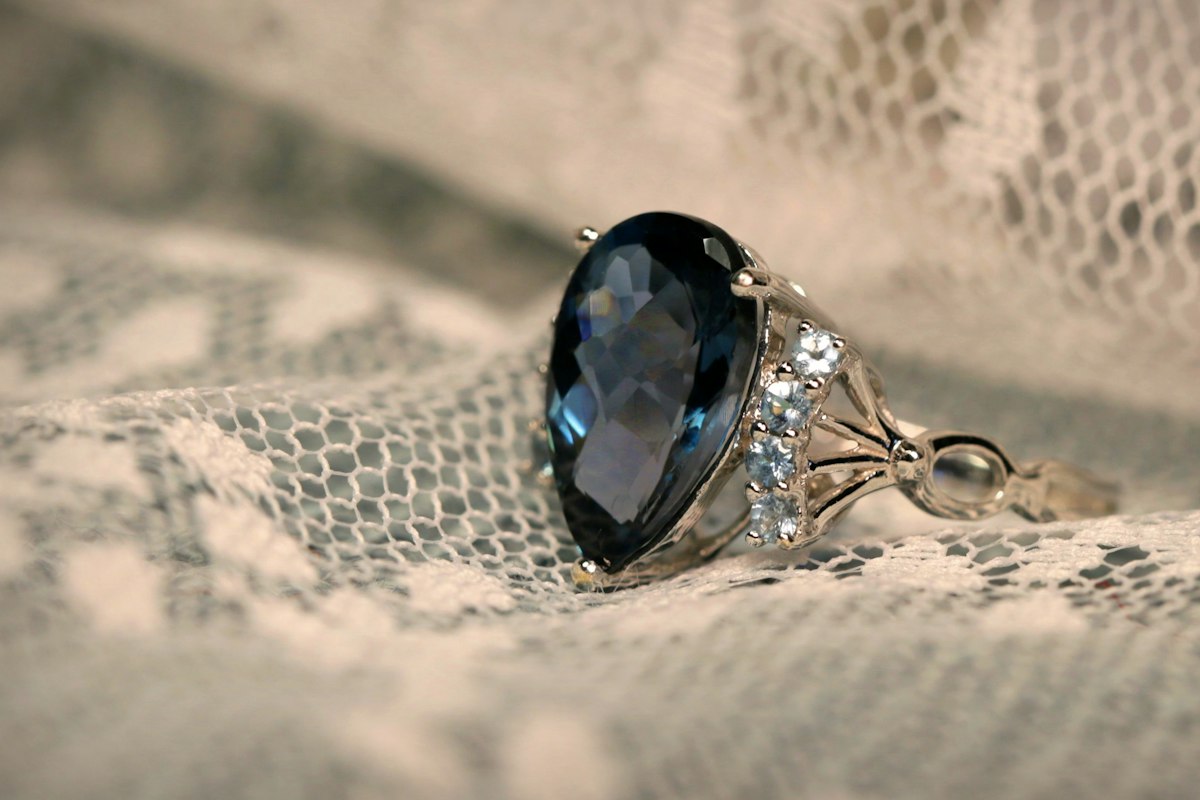
Shape changes three practical things at once: how large the stone looks, how the ring reads on the hand, and how the light plays inside the gem. An elongated shape such as an oval or marquise covers more finger length, so a 1.2-carat marquise can look visibly longer than a 1.5-carat round. GIA also notes that topaz crystals grow in columnar form, so cutters often favor oval and pear outlines to improve yield from the rough. That is a quiet advantage for buyers: ovals and elongated cuts frequently deliver more visible size per dollar than rounds of the same weight.
Which Cuts Sparkle Most? Round and Trillion
Round brilliant is the benchmark for sparkle. Modeled on the 57-58 facet arrangement GIA documents for round brilliants, it returns the most light to the eye of any common outline. A round London blue topaz, such as the Topgemco Twisted London Blue Topaz Ring with its 7mm round center, behaves like a small deep-blue lens, flashing light from every angle. Round suits every hand, pairs with any band style, and never goes out of fashion, which is why it remains the most requested cut for engagement and December birthstone rings.
Trillion (sometimes "trillian") is the triangle of the gem world, usually cut with curved sides and brilliant faceting. It looks strikingly large for its carat weight because its three points spread across the finger. Trillion is a statement cut: modern, geometric, and rare in everyday jewelry. The Topgemco Trillion-Cut London Blue Topaz Ring sets its 6mm triangle in a bezel with accent stones, which keeps the points protected and the silhouette crisp.
Which Cuts Flatter the Finger? Oval, Marquise, and Heart

Oval is the quiet overachiever among cuts. Its elongated outline lengthens the finger and shows more spread per carat than a round, and its brilliant faceting keeps the sparkle high. Topaz's columnar crystals make ovals a natural yield choice, per GIA, so fine ovals are widely available in London blue. The Topgemco Vintage Leaf London Blue Topaz Ring shows the cut at its most romantic, with a 1.54-carat oval framed by leaf-shaped cutouts along the shank.
Marquise is the most elongated classic cut, pointed at both ends and shaped, by legend, after the smile of a French marchioness. Those two points extend the finger dramatically, and a half-bezel setting protects them, exactly the approach of the Topgemco East-West London Blue Topaz Ring, a 1.18-carat marquise set horizontally in a secure half-bezel.
Heart is the cut that states its meaning outright. A well-cut heart needs enough size to read clearly; below about one carat the lobes can blur into a generic teardrop. At 8×8mm and 2.29 carats, the Topgemco Heart-Shaped London Blue Topaz Ring has the presence to carry the silhouette, and its December birthstone status makes it a natural romantic gift for a winter birthday, an anniversary, or a February proposal.
Which Cuts Show Color Depth? Emerald, Asscher, and Baguette
Step cuts trade sparkle for depth. Long, parallel facets create a "hall of mirrors" effect that draws the eye into the body of the stone, which is precisely what a saturated London blue rewards. Emerald cut, rectangular with cut corners, is the classic step cut; its large open table shows the gem's color like a pane of stained glass. The Topgemco Emerald-Cut London Blue Topaz Engagement Ring sets a 1.5-carat emerald-cut center under a halo of six accent stones for extra brilliance at the edge. Asscher is the square cousin, with a vintage feel that suits Art Deco-inspired settings; the Topgemco Half Bezel London Blue Topaz Promise Ring shows a 1.31-carat asscher in a minimalist half bezel.
Baguette is the minimalist's step cut, a slim rectangle usually used as an accent but striking as a solo East-West center. Because step cuts have fewer, larger facets, any inclusions are more visible than in a brilliant cut, but GIA notes that topaz used in jewelry is typically eye clean, so London blue topaz is an ideal candidate for clean step-cut faces.
What Is an East-West Setting, and Why Is It Trending?
An East-West setting simply rotates an elongated stone, emerald cut, marquise, oval, or baguette, ninety degrees, so it lies across the finger rather than along it. The trend has spread through engagement and fine jewelry design because it delivers a fresh, modern silhouette at no extra carat cost: the same stone covers more finger width. East-West also softens the formality of step cuts; a horizontal emerald-cut topaz reads relaxed and editorial rather than bridal-traditional. Topgemco's East-West London Blue Topaz Ring and Baguette London Blue Topaz East-West Ring show the orientation in two very different registers, the first vintage-leaning, the second a stackable minimalist band.
Which Setting Protects a Topaz Best?
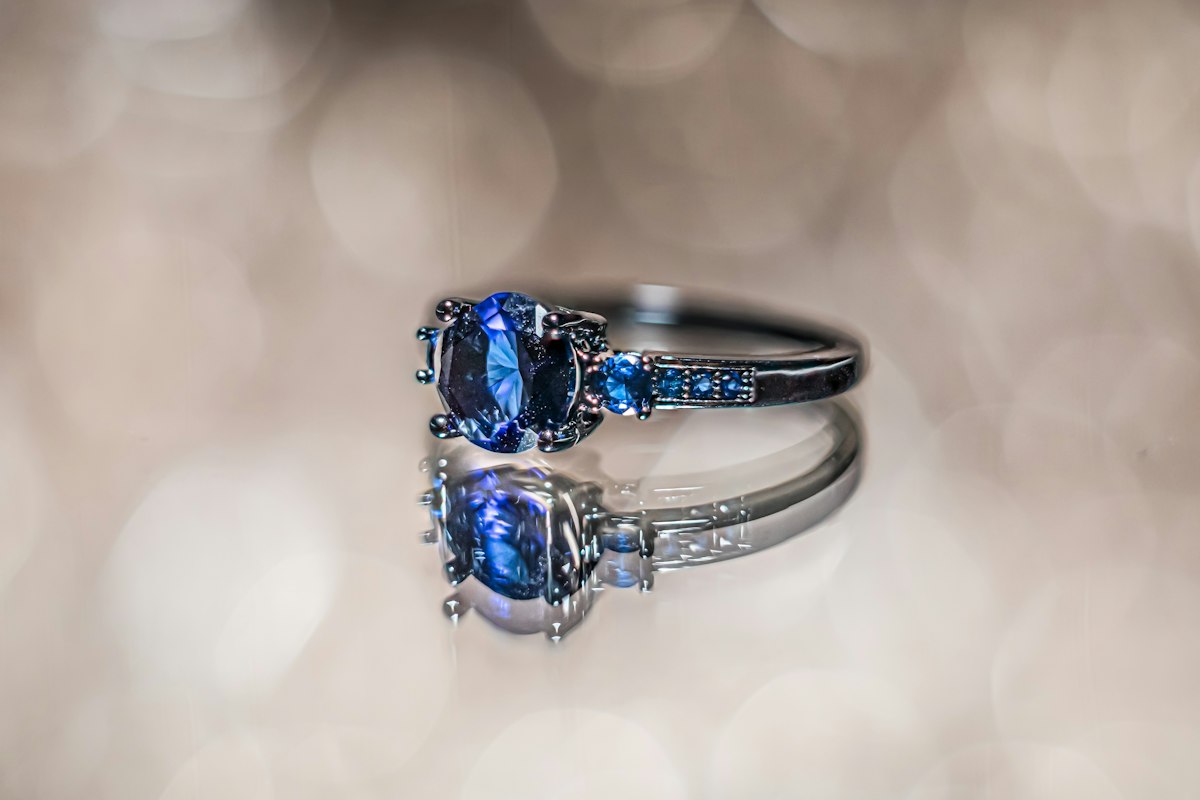
Setting is not decoration; it is armor, and topaz needs a bit more of it than its hardness suggests. GIA lists topaz at 8 on the Mohs scale, hard enough to resist scratching, but topaz also has perfect cleavage in one internal direction, meaning a sharp blow at the wrong angle can split the stone. That combination argues for bezels, half bezels, and robust multi-prong arrangements over delicate four-point settings for rings worn daily. It also argues for removing a topaz ring before heavy work, the gym, or gardening. Bezel-set styles like the Topgemco Ocean Wave London Blue Topaz Ring and the tension-set, semi-bezel Topgemco Princess-Cut London Blue Topaz Tension Ring wrap metal around the girdle, absorbing impacts before they reach the gem. For deeper cleaning and storage guidance, see our London blue topaz ring care guide.
How Do You Match a Cut to the Wearer?
Start with lifestyle, then personality. For daily wear, favor brilliant cuts in protective settings: round, oval, or the bezel-set trillion. For a romantic gift, the heart and vintage oval carry the most meaning. For someone who loves clean, architectural jewelry, step cuts and East-West orientations win. For a December birthday, any of them works, because blue topaz is the December birthstone and the gem of the 4th anniversary, per GIA. And for a men's statement ring, a bold square or slanted princess cut, like the Topgemco Men's London Blue Topaz Statement Ring with its diagonal orientation that makes the stone appear larger, delivers presence without sparkle overload.
A Quick Reference for Every Cut
| Cut | Type | Signature effect | Best for |
|---|---|---|---|
| Round | Brilliant | Maximum sparkle, timeless look | Everyday rings, engagements |
| Oval | Brilliant | Elongates finger, larger look per carat | Classic with a twist |
| Trillion | Brilliant | Geometric, generous spread | Modern statement rings |
| Heart | Brilliant | Romantic symbolism, needs size | Gifts and proposals |
| Marquise | Brilliant | Maximum finger length | Dramatic vertical silhouettes |
| Emerald | Step | Deep color, hall-of-mirrors depth | Vintage and Art Deco styles |
| Asscher | Step | Square vintage presence | Minimalist promise rings |
| Baguette | Step | Clean lines, understated | Stacking, East-West minimalism |
Frequently Asked Questions
What is the best cut for a London blue topaz ring?
For sparkle, the round brilliant, whose 57-58 facet arrangement returns the most light to the eye, per GIA's cut anatomy guide. For color depth, step cuts like the emerald draw the eye into the body of the stone and showcase London blue's saturation. Oval is the best all-rounder: GIA notes cutters favor oval outlines for topaz's columnar crystals, so supply is strong and value excellent.
Is London blue topaz durable enough for an everyday ring?
Yes, with a protective setting. Topaz ranks 8 of 10 on the Mohs hardness scale, GIA reports, resisting scratches well. But topaz has perfect cleavage in one direction, so a hard knock at the wrong angle can split the gem. Bezel or half-bezel settings, like Topgemco's Ocean Wave ring, wrap metal around the stone's edge and make daily wear safe.
Which cut makes a blue topaz look biggest?
Elongated outlines: marquise, oval, and trillion. A marquise or oval of the same carat weight covers more finger length than a round, because mass spreads along an axis instead of pooling in the center. GIA's gem encyclopedia also notes topaz often forms as large crystals that yield sizable cut gems, so generous carat sizes remain affordable.
Is blue topaz a natural stone?
Most blue topaz on the market starts as colorless natural topaz and gains its blue through safe, standard irradiation and heat treatment. GIA states that colorless topaz is plentiful and is often treated to give it a blue color, and that irradiating colorless topaz with electrons at 10 million electron volts creates a sky blue color. Treatments are permanent and routine disclosure practice.
What does a heart-shaped topaz ring symbolize?
The heart states love directly, and the stone deepens the message: blue topaz is the December birthstone and the 4th anniversary gem, per GIA, long associated with honest communication and fidelity. A heart-shaped London blue topaz, like Topgemco's 2.29-carat twisted split-shank ring, reads as a sincere, slightly unconventional alternative to a classic solitaire.
Every cut above is represented in Topgemco's collection of London blue topaz rings in 925 sterling silver, each arriving gift-ready in a velvet ring box.
Shop the CollectionConclusion
Choosing a London blue topaz cut is easier than it looks once you separate the decisions. Cut style sets the light: brilliant cuts for sparkle, step cuts for depth. Shape sets the silhouette: elongated cuts flatter and enlarge, rounds endure. Setting sets the protection: bezels for daily wear, prongs for maximum light. Whittle the choice in that order, and the right ring usually announces itself.
Topgemco's collection spans every cut in this guide, from a 2.29-carat heart to a bezel-set trillion, all set in rhodium-plated 925 sterling silver and gift-boxed. Whichever outline you choose, the deep, inky blue of a well-cut London topaz does the rest.
1. Gemological Institute of America (GIA) - "Topaz", Gem Encyclopedia, retrieved 2026-10-05, https://www.gia.edu/topaz
2. Gemological Institute of America (GIA) - "Diamond Cut: Anatomy of a Round Brilliant", retrieved 2026-10-05, https://www.gia.edu/diamond-cut/diamond-cut-anatomy-round-brilliant
0 comments